
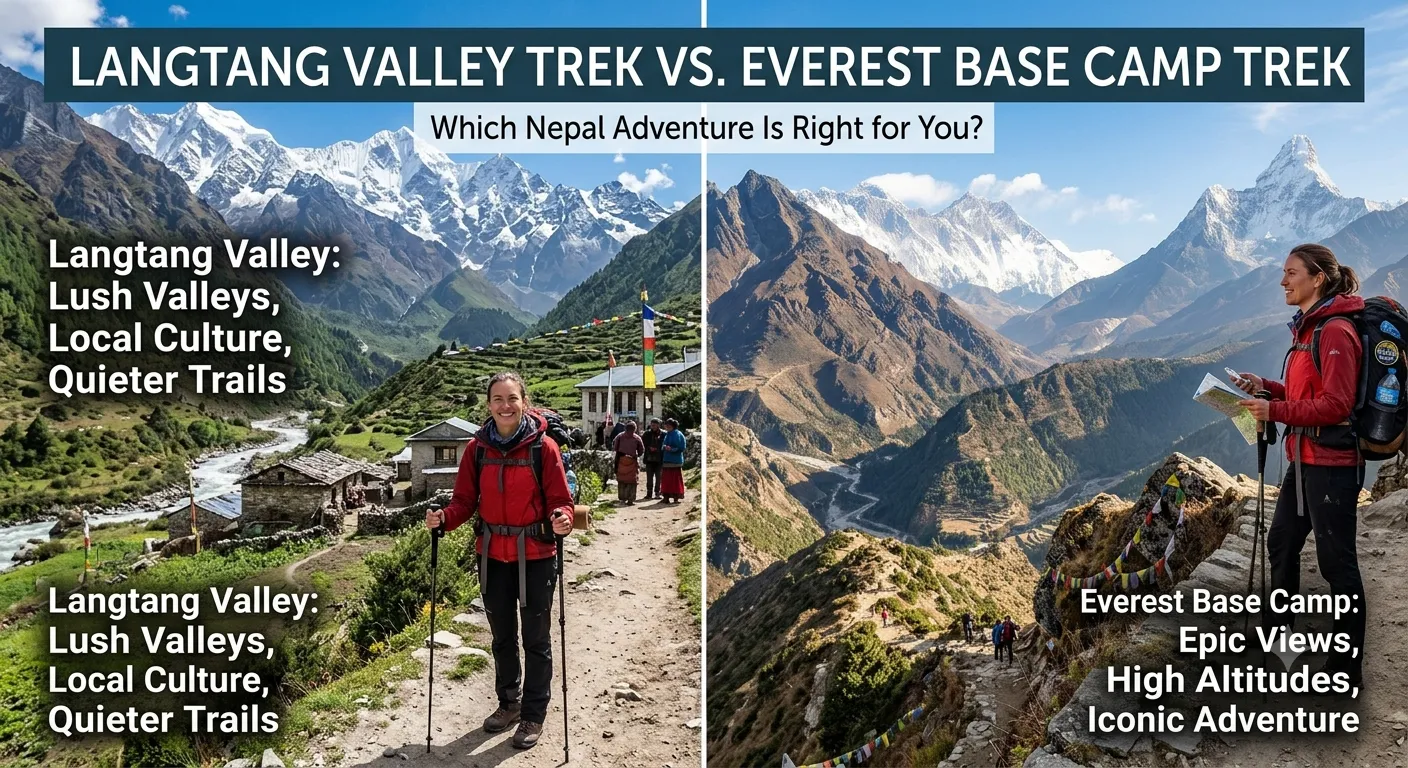
Nepal is home to some of the world’s most breathtaking trekking destinations, attracting thousands of adventure enthusiasts every year. Among the country’s most celebrated trekking routes are the Langtang Valley Trek and the Everest Base Camp Trek. Both offer unforgettable Himalayan landscapes, rich cultural experiences, and rewarding adventures, yet each provides a distinctly different journey.
Whether you’re planning your first Himalayan trek or returning for another mountain adventure, choosing between these two iconic routes can be challenging. This comprehensive guide compares the Langtang Valley Trek and the Everest Base Camp Trek, helping you determine which trek best matches your experience, fitness level, budget, and travel goals.
Introduction to the Langtang Valley Trek
The Langtang Valley Trek is one of Nepal’s most scenic and accessible trekking adventures. Located north of Kathmandu near the Tibetan border, the Langtang region is famous for its alpine forests, snow-capped mountains, traditional Tamang villages, and peaceful atmosphere.
Unlike busier trekking destinations, Langtang offers a quieter experience where trekkers can immerse themselves in nature without large crowds. The trail passes through beautiful rhododendron forests, cascading rivers, yak pastures, ancient monasteries, and stunning mountain viewpoints before reaching the picturesque Langtang Valley.
This trek is ideal for travelers seeking authentic Himalayan culture combined with spectacular scenery.
Introduction to the Everest Base Camp Trek
The Everest Base Camp Trek is arguably the most famous trekking adventure on Earth. Every year, thousands of trekkers travel to the Khumbu region to stand at the base of Mount Everest, the world’s highest mountain.
The journey begins with the exciting flight to Lukla and continues through legendary Sherpa villages such as Namche Bazaar, Tengboche, Dingboche, and Lobuche before finally reaching Everest Base Camp at an altitude of 5,364 meters.
Along the route, trekkers enjoy magnificent views of Everest, Lhotse, Nuptse, Ama Dablam, and many other Himalayan giants while experiencing Sherpa hospitality and Buddhist traditions.
Trek Difficulty Comparison
Both treks require good physical fitness, but they differ significantly in terms of altitude and endurance.
Langtang Valley Trek
The Langtang Valley Trek reaches a lower maximum elevation compared to Everest Base Camp, making altitude sickness less common. Daily walking generally ranges from five to seven hours, with gradual elevation gain throughout the journey.
This trek is suitable for beginners who have a reasonable fitness level and enjoy hiking.
Everest Base Camp Trek
The Everest Base Camp Trek is considerably more demanding. Trekkers often walk six to eight hours per day while gradually ascending above 5,000 meters. The high altitude presents a greater challenge, requiring proper acclimatization and careful pacing.
Although no technical climbing is involved, the trek demands determination, endurance, and preparation.
Mountain Scenery
One of the biggest attractions of both treks is the incredible Himalayan scenery.
Langtang Valley Trek
The Langtang region features dramatic mountain landscapes with peaks including:
-
Langtang Lirung
-
Dorje Lakpa
-
Gangchempo
-
Yala Peak
Trekkers enjoy lush forests, glacial rivers, alpine meadows, waterfalls, and panoramic viewpoints like Kyanjin Ri and Tserko Ri.
Everest Base Camp Trek
The Everest region showcases some of the highest mountains on Earth, including:
-
Mount Everest
-
Lhotse
-
Nuptse
-
Ama Dablam
-
Pumori
-
Thamserku
Kala Patthar provides one of the world’s most iconic panoramic views of Mount Everest at sunrise.
Cultural Experience
Both trekking routes introduce visitors to fascinating Himalayan cultures.
Langtang Valley Trek
The Langtang Valley is home to the Tamang people, whose culture reflects strong Tibetan influences. Trekkers visit traditional villages featuring stone houses, prayer wheels, colorful monasteries, and welcoming local families.
The peaceful environment offers genuine cultural interaction.
Everest Base Camp Trek
The Everest region is home to the legendary Sherpa community. Along the trail, trekkers explore ancient monasteries, prayer flags, chortens, and bustling mountain villages like Namche Bazaar.
The combination of mountaineering history and Buddhist traditions creates a unique cultural experience.
Trek Duration
Trip length is another important consideration.
Langtang Valley Trek
Most itineraries last between 7 and 10 days, making it an excellent option for travelers with limited vacation time.
Everest Base Camp Trek
A standard Everest Base Camp Trek usually requires 12 to 16 days, allowing sufficient time for acclimatization and safe ascent.
Accessibility
Langtang Valley Trek
Access is simple and affordable. Trekkers travel by road from Kathmandu to Syabrubesi, the trek’s starting point.
No domestic flights are required, reducing travel costs and minimizing weather-related delays.
Everest Base Camp Trek
The Everest Base Camp Trek begins with a flight to Lukla, one of the world’s most famous mountain airports. Flights are weather-dependent, and delays or cancellations are relatively common during busy trekking seasons.
Cost Comparison
Budget plays an important role when selecting a trek.
Langtang Valley Trek
The Langtang Valley Trek is generally more affordable because it requires:
-
No domestic flights
-
Lower accommodation costs
-
Lower transportation expenses
-
Shorter itinerary
Everest Base Camp Trek
The Everest Base Camp Trek typically costs more due to:
-
Lukla flights
-
Higher food prices
-
More expensive accommodation
-
Longer trekking duration
-
Additional permits
Accommodation
Both trekking routes feature comfortable teahouses.
During the Langtang Valley Trek, accommodation is simple, clean, and family-operated, creating a warm local atmosphere.
The Everest region offers a wider variety of lodges, ranging from basic teahouses to luxury mountain accommodations in villages such as Namche Bazaar.
Best Time to Visit
The ideal seasons for both treks are:
Spring (March to May)
-
Pleasant temperatures
-
Rhododendron blooms
-
Excellent visibility
-
Stable weather
Autumn (September to November)
-
Crystal-clear mountain views
-
Comfortable trekking temperatures
-
Dry trails
-
Peak trekking season
Winter trekking is possible but colder, while the monsoon season brings rain and reduced visibility.
Wildlife and Nature
The Langtang National Park protects diverse ecosystems featuring:
-
Red pandas
-
Himalayan black bears
-
Musk deer
-
Himalayan monals
-
Langur monkeys
Sagarmatha National Park, home to the Everest Base Camp Trek, supports wildlife including:
-
Himalayan tahr
-
Snow leopards (rare)
-
Musk deer
-
Colorful pheasants
-
Himalayan griffons
Photography Opportunities
Photography enthusiasts will appreciate both routes.
The Langtang Valley Trek offers peaceful landscapes, glaciers, forests, rivers, and authentic mountain villages with fewer crowds.
The Everest Base Camp Trek delivers iconic images of Mount Everest, dramatic glaciers, suspension bridges, monasteries, and breathtaking sunrise views from Kala Patthar.
Who Should Choose the Langtang Valley Trek?
Choose the Langtang Valley Trek if you:
-
Prefer quieter trails
-
Have limited time
-
Want a lower-cost adventure
-
Enjoy authentic local culture
-
Are trekking in Nepal for the first time
-
Prefer moderate altitude
Who Should Choose the Everest Base Camp Trek?
Choose the Everest Base Camp Trek if you:
-
Dream of seeing Mount Everest up close
-
Want to complete one of the world’s most famous treks
-
Have strong physical fitness
-
Can dedicate two weeks or more
-
Enjoy high-altitude adventures
-
Want the classic Himalayan trekking experience
Preparation Tips
Regardless of your choice, preparation is essential.
-
Train with regular hiking and cardio exercises.
-
Wear comfortable, broken-in trekking boots.
-
Pack layered clothing for changing weather.
-
Stay hydrated throughout the trek.
-
Allow adequate time for acclimatization.
-
Purchase comprehensive travel insurance that covers high-altitude trekking.
-
Trek with experienced guides whenever possible for added safety and local knowledge.
Final Thoughts
Both the Langtang Valley Trek and the Everest Base Camp Trek deliver unforgettable Himalayan adventures, but they appeal to different types of travelers. The Langtang Valley Trek offers tranquility, rich Tamang culture, impressive mountain scenery, and excellent value, making it perfect for those seeking a less crowded experience. In contrast, the Everest Base Camp Trek provides the opportunity to stand beneath the world’s highest mountain while following one of the most iconic trekking routes on the planet.
Whichever adventure you choose, you’ll experience Nepal’s breathtaking landscapes, warm hospitality, and timeless mountain traditions. With proper planning, preparation, and respect for the environment, both treks promise memories that will last a lifetime and inspire future journeys into the Himalayas.
